


A Practical Home Safety Guide for Families | Gentle Hill Elder Care
Home often feels like the safest place for our parents.
But for older adults, everyday details such as wet floors, poor lighting, loose rugs, cluttered walkways and stairs can increase the risk of falling.
Falls are not always simply caused by “getting older” or “not being careful.” Changes in strength, balance and vision, together with hazards around the home, can all contribute to fall risk.
If you have elderly parents at home, start by checking these 6 common areas.
1. Bathroom: Wet Floors, Turning and Standing Up
The bathroom is one of the first places worth checking.
Wet surfaces, frequent turning, getting up from the toilet and stepping in or out of the shower can make it easier for an older adult to lose balance.
Check whether:
- The floor often becomes wet or slippery
- A non-slip mat is available
- Grab bars are installed near the toilet or shower area
Keeping the bathroom dry and providing secure support points can make daily routines safer.
2. Bedroom: Night-Time Movement Needs Extra Care
Getting out of bed at night may seem simple, but poor lighting and objects around the bedside can make it more difficult for seniors to move safely.
Check whether:
- There is an easy-to-reach bedside light or night light
- The pathway from the bed is clear
- Slippers are secure and non-slip
- Glasses, phones and other frequently used items are within easy reach
Good lighting can make a big difference, especially when seniors wake up during the night.
3. Living Room: Familiar Spaces Can Hide Small Hazards
Because the living room is used every day, small risks can easily go unnoticed. Common examples include:
- Loose or curled-up rugs
- Electrical cables across the floor
- Small stools or objects blocking the walkway
- Furniture placed too closely together
Try to keep main walking areas clear, secure loose rugs and keep cables close to the wall whenever possible.
4. Hallways: Clear, Bright and Easy to Walk Through
Hallways are often used many times a day when moving between the bedroom, bathroom, kitchen and living room.
Poor lighting, clutter or changes in floor height can increase the chance of tripping.
Check whether:
- The walkway is free from boxes and clutter
- Corners are well lit
- There are raised thresholds or uneven flooring
- The floor becomes slippery when wet
Night lights or motion-sensor lighting may also help in darker areas.
5. Kitchen: Reduce Reaching, Bending and Slippery Floors
Kitchens may have water spills, oil and wet surfaces. They also often require bending down, turning or reaching for items stored in high cabinets.
For seniors with reduced balance or strength, these movements may be more challenging.
Check whether:
- Water and oil spills are cleaned quickly
- Frequently used items are easy to reach
- Seniors often need to bend down or stretch overhead
- They need to climb on stools or chairs to reach items
Whenever possible, keep commonly used food, utensils and kitchen items between waist and shoulder height.
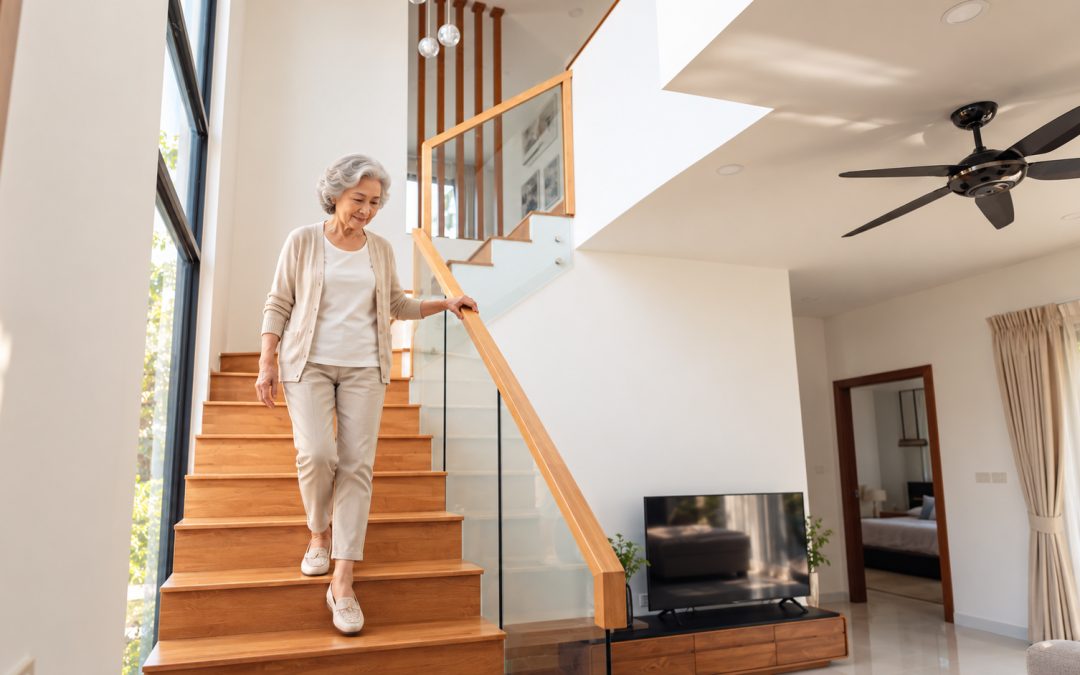
6. Stairs: Handrails, Lighting and Clear Steps Matter
Losing balance on the stairs may lead to more serious injuries than falling on a flat surface.
Check whether:
- There is a strong and secure handrail
- The staircase is well lit
- Step edges are easy to see
- Items are not left on the stairs
- Seniors often carry too many things while going up or down
If an elderly family member is already finding stairs increasingly difficult, it may also be worth looking at their balance, strength and overall mobility.
Home Fall-Prevention Checklist for Families
Take a few minutes to check:
☐ Bathroom floors are dry and have non-slip protection
☐ Grab bars are available near the toilet or shower
☐ Bedrooms and hallways have enough lighting
☐ Rugs, cables and clutter do not block walking areas
☐ Frequently used items are easy to reach
☐ Stairs have secure handrails and clearly visible steps
☐ Seniors wear well-fitting, non-slip footwear
Home modifications are only one part of fall prevention.
If your parent has started holding onto walls or furniture when walking, struggling to stand up, becoming noticeably unsteady, or has already experienced a fall, it may be helpful to speak with a doctor, physiotherapist or another appropriate healthcare professional.
A Gentle Hill Reminder
Preventing falls does not always require major changes.
Sometimes, something as simple as securing a loose rug, adding a night light or moving frequently used items to an easier-to-reach shelf can make everyday life safer.
If your family is exploring a nursing home in Kulai or Johor Bahru, elder care, senior day care or respite care, look beyond comfort and facilities. It is also worth checking whether the care environment considers non-slip flooring, grab bars, clear walking routes and safe daily mobility.
Want to learn more about the care environment at Gentle Hill Elder Care?
Arrange a visit and speak with our team about your family member’s current needs.
Sources: World Health Organization (WHO), Centers for Disease Control and Prevention (CDC), NHS
Last Updated: October 2026
This article is for general elderly care and health education only. It does not replace individual advice or assessment from a doctor, physiotherapist or other healthcare professional.